
Beginner’s Guide to Scotch Whisky Tasting: How to Taste Like a Pro
So, you want to learn how to taste Scotch whisky? It’s actually a pretty simple process that unlocks a whole world of amazing, complex flavours. The whole thing boils down to five key steps: checking out the colour, smelling the aromas (we call this ‘nosing’), taking a small sip, letting it swirl around your mouth, and finally, noticing the flavours that linger. Easy, right?
Here’s a mind-blowing fact for you: 80% of a whisky’s flavour profile is actually detected through your nose, not your tongue. What does this mean? Well, if you’re not smelling your whisky properly, you’re seriously missing out on most of the experience you paid for! Your tongue is pretty basic—it can only pick up sweet, sour, salty, and bitter. Your nose, on the other hand, can identify thousands of different scents.
In our experience serving whisky lovers here in Malaysia, we’ve noticed that beginners who follow a proper scotch whisky tasting guide like this one develop their palate 3x faster than people who just drink it casually. Seriously! By learning these simple steps, you’ll quickly go from thinking “this just tastes like alcohol” to spotting specific notes like vanilla, apple, or a hint of smoke. Trust us, it makes every single dram way more enjoyable.
Table of Contents
- The Essential Equipment for Whisky Tasting
- The Professional Five-Step Tasting Process
- Understanding Scotch Whisky Flavor Profiles by Region
- Common Tasting Mistakes Beginners Make
- Building Your Tasting Vocabulary
- Practical Tips for Malaysian Whisky Enthusiasts
- Advanced Tasting Techniques
- Your Next Step to Mastering Scotch Appreciation
Learning to taste Scotch whisky like a pro really deepens your appreciation for the craft. It helps you pick up on all the subtle differences between regions, distilleries, and even how they’re aged. Think of it this way: it’s the difference between just hearing a song and actually understanding the lyrics and hearing every single instrument.
Here at Mr. Chow, we’ve guided thousands of Malaysian whisky fans on their tasting journey. We’ve seen them go from their very first dram to developing a sophisticated palate that can detect the tiny nuances making each bottle special. This guide shares the exact techniques we teach right here in our store, making it the perfect starting point for whisky tasting for beginners in Malaysia.
The Essential Equipment for Whisky Tasting
The Right Glass Makes All the Difference
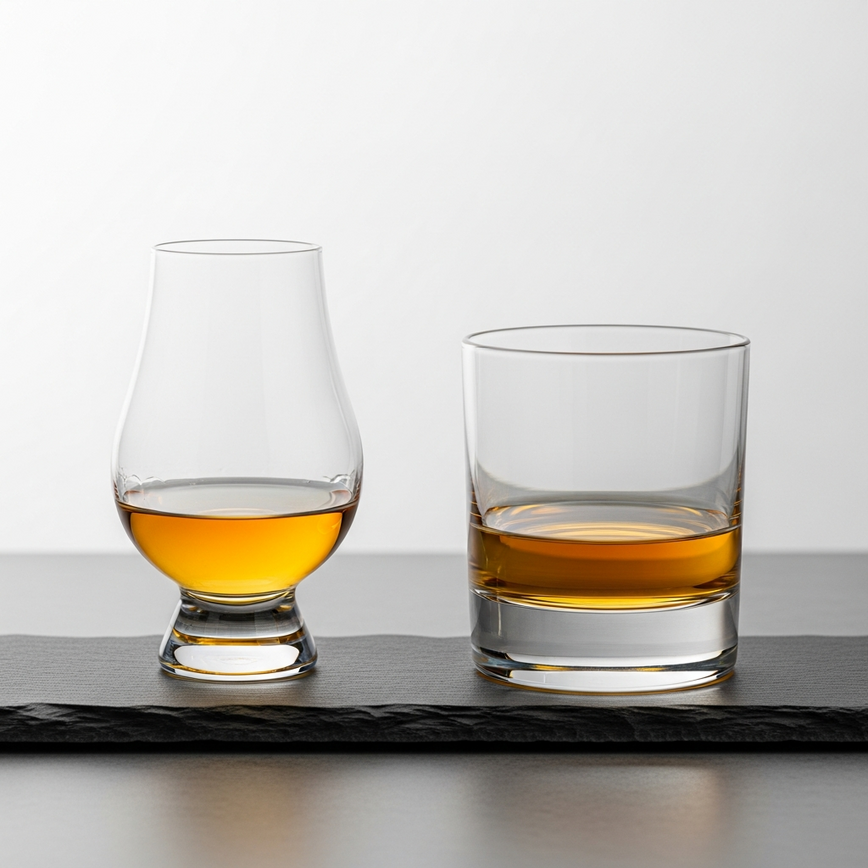
Believe it or not, professional whisky tasting all starts with the right glassware. A tulip-shaped glass, or the classic Glencairn glass, is designed to concentrate all those lovely aromas and point them straight towards your nose. It’s like a megaphone for scents; that narrow opening focuses all the complex smells in one spot for you to really enjoy. We always recommend staying away from wide-rimmed glasses or tumblers for serious tasting because they let the aromatic compounds spread out and escape too quickly. You’ll lose all those delicate notes before you even get a chance to appreciate them!
Water and Its Role
Having some room temperature spring water on hand is essential for a proper tasting. Just adding 3-5 drops of water to cask-strength whiskies (these are the powerful ones bottled at a high, undiluted proof, usually above 50% ABV) can totally open up the spirit and release hidden flavours. The water actually breaks down certain chemical bonds, allowing new, more subtle aromas to pop out—kind of like a flower blooming. Many of our customers are shocked when they learn that even the master blenders add a bit of water when they evaluate their whiskies to get a true sense of its character.
Setting the Environment
For your tasting, try to pick a spot that’s well-lit and free from any strong smells. Things like cooking aromas or even perfume can really mess with your ability to detect the whisky’s subtle scents. So, maybe avoid wearing perfume or aftershave, and make sure the room is at a comfortable temperature. In our experience, the best tasting sessions happen in neutral environments where the whisky’s character can be the star of the show. For our Malaysian customers, this means it’s probably not a good idea to do a serious tasting next to a sizzling plate of sambal belacan, la!
The Professional Five-Step Tasting Process
Step 1: Visual Examination
First, hold your glass up against a white background and have a good look at the whisky’s colour. The shade can range from a pale gold to a deep amber, and it gives you clues about things like the type of cask it was aged in, its age, and what was in that cask before (like sherry or bourbon). For example, whiskies aged in sherry casks usually have richer, darker colours, almost like a strong teh, while those from bourbon barrels tend to look lighter and more golden.
Now, give the whisky a gentle swirl and watch for the “legs” or “tears” that form on the sides of the glass. These are the oily streaks that run down the inside. If you see thicker, slower-moving legs, it often suggests a higher alcohol content or a richer, more viscous feel in your mouth. This gives you a little preview of the whisky’s texture before you even take a sip.

Step 2: The First Nose
Bring the glass up towards your nose, but don’t stick your nose right inside—keep it about an inch below your nostrils to avoid that harsh alcohol burn. Take a few gentle, short sniffs from different angles around the rim. The pros often recommend the “triangle method”—nosing from the left edge, the centre, and then the right edge to catch all the different aromatic compounds. Some scents are lighter and rise straight up, while heavier ones tend to hang around the sides of the glass.
Common aromas you might pick up on the first nose include:
- Fresh fruits (like apple, pear, or citrus)
- Dried fruits (think raisins and figs)
- Vanilla and caramel from the oak barrel aging
- Smoke and peat (especially in whiskies from Islay)
- Floral notes (like heather or honey)
Step 3: Adding Water (When Appropriate)
If you’re tasting a whisky that’s above 46% ABV, go ahead and add 2-3 drops of room temperature water. This little bit of dilution helps to reduce the alcoholic “prickle” on your nose and tongue and releases something called esters. These are special aromatic compounds that create those complex fruity and floral flavours. After adding the water, just wait about 30 seconds before nosing it again. You’ll often be amazed at how different the whisky smells after this one small step.
Step 4: The First Taste
Time for the best part! Take a small sip, just enough to cover your tongue, and let the whisky coat your entire palate. Don’t swallow it right away. Instead, gently “chew” the whisky for a few seconds. This just means moving it around your mouth, making sure it touches your cheeks, under your tongue, and the roof of your mouth. Professional tasters will often hold the whisky in their mouth for about 10-15 seconds before swallowing. This warms up the liquid just enough to release even more layers of flavour.
Step 5: The Finish
After you swallow, pay attention to the flavours and sensations that linger. This is what we call “the finish.” Does the taste disappear almost immediately (that’s a short finish), or does it evolve and stick around for a while (a long finish)? The finish can last anywhere from a few seconds to several minutes in really exceptional whiskies. Premium bottles typically have complex, evolving finishes that might reveal new flavours like spice, oak, or a gentle smokiness as time passes. A long, pleasant finish is often the sign of a really well-crafted whisky.
Understanding Scotch Whisky Flavor Profiles by Region
In the world of Scotch, the region where a whisky is made can give you a general idea of its character, a bit like how different states in Malaysia are famous for certain types of food. But remember, these are just guidelines, not strict rules, as modern distillers love to experiment with different styles. This table is a handy reference for what you can generally expect.
| Region | Typical Characteristics | Example Flavors | Best for Beginners |
|---|---|---|---|
| Speyside | Elegant, fruity, complex | Apple, pear, honey, nuts | Yes – smooth and approachable |
| Highland | Diverse, full-bodied | Heather, honey, spice, fruit | Yes – varied styles available |
| Islay | Peaty, smoky, maritime | Smoke, seaweed, medicinal | No – too intense for beginners |
| Lowland | Light, grassy, gentle | Citrus, grass, vanilla | Yes – mild and accessible |
| Campbeltown | Briny, complex, oily | Salt, fruit, smoke | Moderate – unique character |
Common Tasting Mistakes Beginners Make
Rushing the Process
So many new tasters try to identify every single flavour right away. But professional tasting takes a bit of patience! Think of it like speed-reading a poem; you might get the basic words, but you’ll totally miss the deeper meaning and beauty. We always tell our customers to spend at least 2-3 minutes on each step, just allowing their palate to adjust and pick up on those subtle nuances.
Drinking Too Much at Once
Taking big gulps is a no-no. It just overwhelms your palate with alcohol and masks all the delicate flavours. Professional tasters use tiny sips—about 2-3ml, or half a teaspoon—to properly evaluate each whisky. This lets you taste the spirit’s true character without the alcohol burn taking over everything.
Ignoring the Nose
Remember how we said 80% of flavour comes through aroma? Skipping the nosing part seriously limits your tasting experience. You are literally missing out on most of the complexity you paid for! Make sure you spend just as much time nosing the whisky as you do tasting it to get the full picture.
Comparing Too Many Whiskies
Palate fatigue is a real thing. After you’ve tasted 3-4 different whiskies, your senses can get a bit tired and overwhelmed, making it tough to tell the flavours apart. For beginners, we recommend limiting your tasting sessions to just 2-3 different expressions. This helps you maintain your sensitivity and focus, ensuring you can properly appreciate each one.
Building Your Tasting Vocabulary
Learning how to name what you’re tasting is a skill that helps you better understand what you actually like. Don’t worry about sounding like some kind of expert; the goal is just to build a mental library of flavours. That way, when you’re shopping for a new bottle, you can say something like, “I enjoy whiskies that are sweet with vanilla and fruit notes,” which helps us recommend the perfect bottle for you.
Sweet Flavors
- Honey
- Vanilla
- Caramel
- Toffee
- Chocolate
- Dried fruits
- Fresh fruits
Savory and Spicy Notes
- Black pepper
- Cinnamon
- Nutmeg
- Ginger
- Leather
- Tobacco
- Wood
Fresh and Floral
- Citrus peel
- Green apple
- Heather
- Lavender
- Rose petals
- Grass
Rich and Deep
- Dark chocolate
- Coffee
- Molasses
- Fig
- Raisin
- Prune
- Nuts
Getting your tasting vocabulary down takes a bit of time. We always encourage our customers to keep some tasting notes and maybe even look up a flavour wheel designed for whisky. It’s a really fun way to track your journey and see how your palate evolves over time.
Practical Tips for Malaysian Whisky Enthusiasts
Climate Considerations
Malaysia’s hot and humid climate definitely affects how you should store and serve your whisky. Always store your bottles standing upright in a cool, dark place, away from direct sunlight. UV rays can actually damage the complex compounds in the whisky over time. When you’re ready to drink, serve it at room temperature (around 20-22°C) rather than chilled. In our weather, “room temperature” can get pretty warm, so a cool, air-conditioned room is ideal. Over-chilling it with too much ice will just numb your taste buds and hide all those beautiful aromas.
Building Your Home Tasting Setup
You can start with just the basics: some proper glassware, room temperature water, and some neutral crackers (like plain water crackers) to cleanse your palate between drams. It’s best to avoid flavourful snacks like keropok or spicy nuts, as their strong tastes will definitely interfere. If you get more serious, you can invest in things like whisky stones for a slight chill without dilution, or even aromatic sprays for your glasses.
Exploring Our Premium Scotch Collection
At Mr. Chow, we’ve put together a collection of over 200 Scotch expressions specifically with Malaysian palates in mind, from easy-drinking Speysides for beginners to complex Islay malts for the adventurous. Our collection includes exclusive bottlings and limited releases that we source directly from authorized distributors, which guarantees 100% authenticity for every single bottle. What this means for you is that every bottle comes with the official Malaysian customs duty stamp. So you can be confident you’re getting the real deal, not some parallel import or a fake one.
Advanced Tasting Techniques
The Breathing Method
Ready for a pro tip? Try opening your mouth just slightly while you’re nosing the whisky. This allows aromas to reach your olfactory receptors through both your nose and the back of your throat (this is called the retronasal passage). It’s a technique used by master blenders, and it gives you a more complete, three-dimensional aromatic experience, often revealing deeper layers of scent.
Comparative Tasting
Once you’re comfortable tasting individual whiskies, try doing some side-by-side comparisons. You could taste different ages from the same distillery, or similar styles from different regions. For example, tasting a Glenfiddich 12 next to a Glenfiddich 15 lets you directly identify how those extra years in the cask add new layers of spice and dried fruit. This is one of the fastest ways to sharpen your palate and figure out exactly what you prefer.
Temperature Variation
You can also experiment with the serving temperature. Try letting the whisky warm up in your hands for a few minutes, or add a single large ice cube. Different temperatures bring out different flavour compounds; warmth can emphasize sweeter notes, while a slight chill might highlight oak and spice. This can give you a whole new perspective on bottles you thought you knew well.
Your Next Step to Mastering Scotch Appreciation
Developing your whisky tasting skills is all about practice, patience, and having quality whiskies to try. We suggest starting with approachable single malts like Glenfiddich 12 or Glenlivet 12—both are excellent for learning the basic tasting techniques. As your palate develops, you can gradually start exploring more complex expressions from different regions. Don’t feel pressured to detect every single note listed on the bottle; just focus on the broad categories at first, like “sweet,” “fruity,” or “smoky.”
Every bottle in our collection meets the highest authenticity standards, as we source them directly from authorized importers. With same-day delivery available in the Klang Valley and standard delivery throughout Peninsular Malaysia, you can start your whisky tasting journey with total confidence, knowing each bottle is the real deal, exactly as the makers intended.
Remember, tasting whisky is a personal journey. While these professional techniques give you a great foundation, it’s your own preferences and discoveries that make the experience uniquely yours. So take notes, experiment with different styles, and most importantly, have fun with the process of developing your palate and deepening your appreciation for Scotland’s national spirit. Happy tasting, everyone!
© Mr. Chow Liquor Store. All pricing and availability are subject to change. For the latest stock and offers, contact us via WhatsApp: +60169562840.
Frequently Asked Questions
How do I properly taste Scotch whisky for the first time?
To properly taste Scotch whisky, follow the five-step process: visually examine the colour, ‘nose’ the aromas, take a small sip, coat your palate, and savour the finish. This methodical approach is crucial because up to 80% of a whisky’s flavour is detected through smell, not taste. For the best experience, hold the whisky in your mouth for 10-15 seconds before swallowing to warm it and release more flavours. At Mr. Chow, we find beginners who follow this guide develop their palate 3x faster than those who drink casually.
What is the best Scotch whisky for a beginner in Malaysia?
The best Scotch whisky for a beginner is typically a smooth, approachable single malt from the Speyside region. These whiskies are known for their gentle, fruity, and sweet profiles with notes of apple and honey, which are less intimidating than intensely smoky styles. We highly recommend starting with classics like Glenfiddich 12 Year or Glenlivet 12 Year, which are priced affordably in Malaysia, usually between RM250-RM350. At Mr. Chow, these two bottles are our top recommendations for new enthusiasts as they provide a perfect introduction to single malt characteristics.
Why does the type of glass matter for tasting whisky?
The type of glass matters because a tulip-shaped glass, like a Glencairn, is specifically designed to concentrate the whisky’s aromas towards your nose. Since 80% of a whisky’s flavour profile comes from its smell, using the right glass significantly enhances the tasting experience compared to a wide-rimmed tumbler which lets aromas escape. The narrow opening of a Glencairn glass acts like a funnel, focusing delicate aromatic compounds for better detection. We always advise our customers that investing in a proper tasting glass is the single best way to get more value from a bottle costing over RM200.
How much water should I add to my whisky?
You should only add a few drops of room temperature water, typically 3-5 drops, to whiskies that are high-proof or cask strength (above 46% ABV). Adding a little water can “open up” the whisky by reducing the alcoholic burn and releasing more subtle fruity and floral aromas. For a standard 40% ABV whisky, adding water is usually unnecessary and may over-dilute the flavours. In our tasting sessions, we demonstrate how just 2-3 drops can completely transform the nose of a cask-strength whisky, a technique used by master blenders themselves.
What is the difference between Speyside and Islay Scotch?
The main difference is their flavour profile: Speyside whiskies are typically fruity, sweet, and elegant, while Islay whiskies are intensely smoky, peaty, and maritime. Speyside malts are ideal for beginners with notes of apple and vanilla, whereas Islay malts get their powerful character from peat smoke, resulting in medicinal or campfire-like flavours. For example, a Speyside like Glenfiddich 12 is smooth and approachable, while an Islay like Laphroaig 10 has a bold, smoky character. We recommend starting your journey with our collection of over 50 Speyside whiskies before exploring Islay’s peat monsters.
What is the ‘finish’ of a whisky?
The ‘finish’ of a whisky refers to the flavours and sensations that linger in your mouth after you have swallowed it. A high-quality whisky will have a long and evolving finish where new notes like spice or oak might appear, while a simpler whisky may have a short finish that disappears in seconds. An exceptional whisky can have a finish that lasts for a minute or more, which is a key indicator of its craftsmanship. In our experience, whiskies aged 15 years or more often have the most memorable and complex finishes.


![Highland Park Spirit Of Dragon Legend Island Single Malt [700ML]](https://mrchowliquorstore.com/wp-content/uploads/2026/01/Highland-Park-Spirit-Of-Dragon-Legend-Island-Single-Malt.jpg)


![Glenrothes 15 Years Speyside Single Malt [700ML]](https://mrchowliquorstore.com/wp-content/uploads/2026/04/Glenrothes-15-Years.jpg)
![Buchanan's 12 Years Deluxe Blended Scotch [750ML]](https://mrchowliquorstore.com/wp-content/uploads/2026/04/Buchanans-12-Years.jpg)